Does He Like You? Crush Test
- 3.8
- Rating
- 50.00K
- Installs
- Free
- Price
 Analysis by App-foxy
I approached Does He Like You? Crush Test as a lighthearted trivia game rather than a serious relationship tool, and that distinction is important. Its appeal is easy to understand: you have a crush, you are curious about the mood between you, and you want a quick result that gives the situation a playful nudge. In my experience, this kind of app works best as a conversation starter or a private bit of amusement, not as evidence of what another person actually feels.
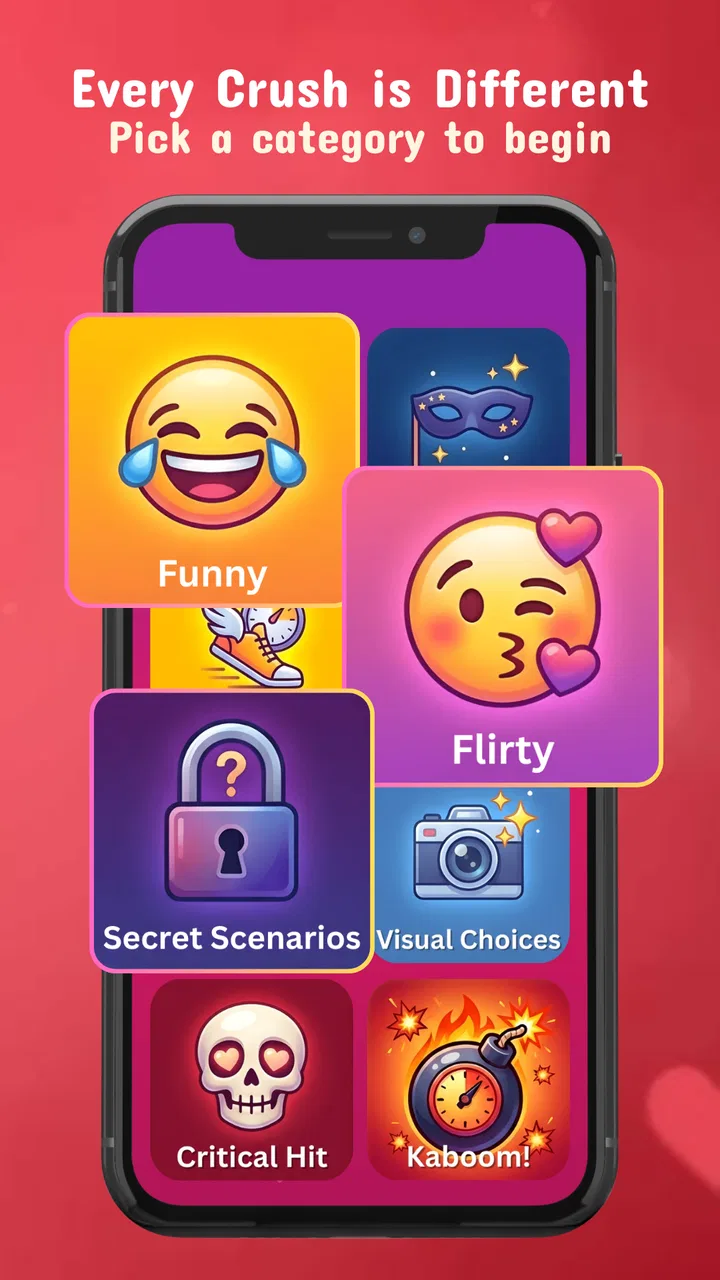
That makes the game surprisingly easy to place. It is free to install, aimed at teen users, and created by Dream Lab Entertainment. The store presents it as a secret-crush detector built around quick tests, while the short description asks a direct question: “Does He Like You?” I would recommend it to someone who enjoys casual trivia and understands that the result is for fun. I would not recommend using it to make an important decision about a friendship, confession, or relationship.
What the crush test feels like in everyday use
The main strength is its low-pressure idea. You do not need to commit to a long game session or learn a complicated system before reaching the point of the experience. The concept is built around curiosity: think about the person you like, take the test, and see what result comes back. That quick rhythm suits the way people usually discover this type of app, often while chatting with friends or looking for something amusing to try for a few minutes.
You May Also Like

 AccuWeather: Weather Radar
AccuWeather Review: A Quick, Clear Forecast for Everyday Decisions
For everyday plans, the best forecast is the one you can understand quickly. AccuWeather makes rain timing, radar, and local conditions easy to act on, with a few trade-offs.

 Hill Climb Racing
Why Hill Climb Racing Still Turns Crashes Into One More Run
A tiny car, a bumpy hill and one more upgrade: Hill Climb Racing keeps resurfacing because its simple chaos makes every near-miss feel personal.

 AliExpress - Shopping App
AliExpress Makes Global Shopping Feel Personal, but Shoppers Bear the Risk
AliExpress turns a global marketplace into a pocket-sized discovery engine. Its reach is useful, its shopping loop compelling, and its trade-offs easy to miss.

 Lords Mobile: Kingdom Wars
Lords Mobile Is a Kingdom-Building Routine, Not a Quick Match
A case-by-case verdict on the building, battles, device demands, and social commitments that make Lords Mobile rewarding for some players and exhausting for others.

 PDF Scanner app - TapScanner
TapScanner Makes Paperwork Easier to Capture, Check, and Share
TapScanner makes scanning with a phone feel less like a rescue operation and more like a dependable step in getting work done. Its capture tools are useful, though not flawless.

 Block Blast!
 Shows How Much a Puzzle Game Can Leave Out
A quiet grid game shows why puzzle players increasingly value instant clarity, repeatable skill and low-pressure play—and where the genre still needs to catch up.
More From Our News Desk
View All News


I can easily imagine using it during a sleepover, passing a phone around with friends, or opening it after a conversation with someone you like and wondering whether the signs meant anything. The result can create a laugh, a debate, or a new question to discuss. That social quality is more valuable than the prediction itself. It gives people a simple activity to share without requiring everyone to understand a complex game or follow a long story.
At the same time, I would keep expectations firmly in check. A crush test cannot read another person’s thoughts, inspect private messages, or replace an honest conversation. The result should be treated like a playful prompt. If it says something encouraging, enjoy the moment, but look for real-world signals such as respectful communication, consistent interest, and whether the other person makes time to talk. If the result is disappointing, there is no reason to treat it as a verdict.
This is where the trivia classification makes sense. The game is closer to a personality quiz or novelty test than to a traditional trivia title with factual questions and correct answers. Its entertainment comes from anticipation and interpretation. You are not proving knowledge; you are seeing how a playful test frames a familiar romantic question.
The strongest part is the immediate social hook
The most convincing reason to try it is that the premise is instantly understandable. There is no need to explain a fictional universe, memorize rules, or build a character. The question is personal enough to make the result feel relevant, even though it should not be mistaken for a genuine assessment. That directness gives the app a natural advantage over more general quiz games when the group already wants to talk about crushes.
It also works well as a private curiosity. You may not be ready to ask someone directly whether they like you, and a quick test can offer a harmless way to acknowledge the question. I see that as the appropriate emotional role of the app: it lets you explore a feeling without forcing an immediate decision. Used that way, it can be entertaining without creating unnecessary pressure.
A useful trick is to take the result as a prompt for self-reflection rather than as a prediction. After seeing it, ask yourself what made you curious in the first place. Did the person initiate conversations, remember small details, or behave warmly with everyone? This turns a simple game into a reason to examine your own assumptions. That is a more grounded use than showing the result to the person you like and treating it as proof.
Another practical approach is to play it with a friend who knows the situation. A friend can help separate genuine observations from wishful thinking, especially when a crush makes every small gesture seem meaningful. The app supplies the playful moment; the conversation supplies the useful perspective. That combination is stronger than using the test alone.
Why it compares differently with ordinary trivia games
Compared with a standard trivia game, this title has less value for learning facts or measuring knowledge. A conventional quiz can reward improvement because you can remember answers, recognize patterns, and track what you know. A crush test has a different goal. Its pleasure comes from the topic and the suspense, not from becoming better at a subject.
Compared with a serious dating or social app, it is also much less demanding. You are not building a profile, searching through people, arranging a meeting, or managing an ongoing conversation. That makes it more comfortable for a younger audience and for anyone who only wants a short, playful experience. The trade-off is that it cannot deliver the real interaction or context that a direct conversation provides.
Compared with a personality quiz, the romantic framing makes this game more immediately engaging for a particular situation. A broad personality test might tell you something about your habits or preferences, while this one focuses attention on the person occupying your thoughts. The narrow theme is both its identity and its limitation: if you are not interested in crush-related entertainment, there is little reason to choose it over a broader quiz.
I would also distinguish it from advice content. An advice article can help someone think through boundaries, communication, and consent. This game is not a substitute for that kind of guidance. Its role is lighter and more temporary. That is not a flaw by itself, but it becomes a problem if a player expects the result to answer a serious emotional question.
The meaningful weakness: playful results can be overread
The central weakness is not the idea; it is the possibility that users may give the result more authority than it deserves. A teenager who already feels uncertain might see a positive outcome and assume the other person must feel the same. A negative outcome could be taken personally, even though a novelty test cannot know the details of a real relationship. The app’s simple premise makes it engaging, but that same simplicity can encourage overconfidence.
I would avoid using it immediately before sending an emotional message or making a public declaration. That is a specific situation where the game is not the right decision tool. If you are about to confess your feelings, ask someone out, or confront a confusing interaction, pause and consider the actual evidence instead. Think about whether the conversation can happen respectfully and whether you are prepared for either answer.
There is also a social risk when friends treat the test like a challenge. A group may pressure someone to reveal a crush, share a result, or contact the person named in the test. I would set a simple rule before playing: nobody has to disclose a name, show a result, or act on it. That keeps the activity fun and protects the player who is more private or nervous.
The free entry point is helpful, but in-app purchases cost $2.99 per item. I would be cautious about spending money on extra novelty content unless you already enjoy the experience and understand exactly what you are buying. For a short casual test, paid additions may not offer enough lasting value for every player. Families should also remember that the content rating is Teen and discuss purchases with younger users before handing over a device.
The game is currently at version 1.0, so I would approach it as an early, simple experience rather than a mature platform with a long-established feature set. That does not make it unusable, but it does shape my expectations. I would not install it expecting deep progression, extensive customization, or the breadth of a large trivia collection. Its appeal rests on the focused crush-test concept.
Small habits that make the experience better
My first suggestion is to take the test once for fun and resist repeating it until you receive the answer you want. Replaying a novelty test to chase a preferred outcome can turn a harmless activity into a source of anxiety. The most enjoyable version is spontaneous: take the result, laugh or think about it, and then return to the real situation with a clear head.
My second suggestion is to keep names and personal details private when playing with others. The app’s theme naturally invites curiosity about a specific person, but you do not need to identify them to enjoy the result. Using a nickname or keeping the test to yourself can prevent an amusing moment from becoming gossip. This is especially useful in school or group settings, where a private crush can quickly become public.
My third suggestion is to compare the result with behavior over time, not with one isolated interaction. If someone says hello once, likes a post, or responds quickly one evening, that does not automatically indicate romantic interest. Look for a broader pattern and, when appropriate, communicate directly. The game can start that thought process, but it should never finish it for you.
A fourth useful habit is to decide in advance what you want from the session. If you want a laugh with friends, keep it social and relaxed. If you are feeling genuinely distressed about mixed signals, choose a trusted person or a thoughtful conversation instead. Knowing which of those two situations you are in prevents the app from being asked to solve a problem it was not designed to solve.
Who will enjoy it, and who should skip it
I think this game suits teens and adults who enjoy playful relationship-themed quizzes, especially people looking for a quick activity rather than a full game. It is a good fit for a friend group that likes comparing silly results, for someone who wants a small distraction after thinking about a crush, or for a user who enjoys trivia concepts with a personal twist.
It is less suitable for anyone seeking reliable dating guidance, psychological analysis, or a genuine compatibility assessment. If you want to understand whether someone likes you, direct and respectful communication is better. If you want a rich trivia experience with factual learning, a conventional quiz game will probably provide more lasting value. If you dislike tests that produce entertainment-oriented answers, this premise may feel too shallow.
The minimum operating requirement is Android 7.0, which makes the game accessible to devices running a relatively established version of the mobile operating system. It is available at no upfront cost, and the developer is Dream Lab Entertainment. The project has reached over 10K installs, giving it a modest audience for a newer casual title, but I would still judge it by whether its focused concept matches your expectations rather than by its reach.
The Teen rating is worth taking seriously because the subject is romantic curiosity, even though the basic idea is light. Parents and guardians may want to explain that a result is not a fact about another person and that nobody should be pressured to reveal a crush. That short conversation can make the app much safer and more enjoyable for younger players.
My verdict after weighing the fun against the limits
Does He Like You? Crush Test succeeds when it stays in its proper lane: a quick, playful trivia-style experience for people curious about a crush. Its best feature is the immediate social hook, not any claim of genuine detection. I like that it can create a laugh, encourage a conversation with a friend, or give someone a harmless moment of emotional curiosity without the commitment of a dating service.
My reservation is equally clear. The result has no authority over a real relationship, and users who are already anxious may be better served by honest communication than by another test. The purchase option also makes me cautious about spending beyond the free experience, particularly if the novelty wears off quickly. Those limitations do not ruin the game, but they define how I would use it.
For me, the right recommendation is a qualified yes. Install it if you want a free, short crush-themed diversion and can treat the outcome as entertainment. Play privately or with friends who respect boundaries, avoid repeating the test compulsively, and never use the result as proof of someone else’s feelings. If you approach it with that mindset, Dream Lab Entertainment’s small trivia game can be a fun conversation starter; if you need an actual answer, the better next step is still a real conversation.
FAQs for Does He Like You? Crush Test
01What is the main purpose of the 'Does He Like You? Crush Test' app?
The 'Does He Like You? Crush Test' app is designed to help users determine if their crush reciprocates their feelings. By answering a series of questions about their interactions and experiences, users can gain insights into the potential romantic interest of their crush. It's a fun and interactive way to explore relationship dynamics.
02How accurate are the results provided by the app?
The results of the 'Does He Like You? Crush Test' are meant to be fun and entertaining rather than scientifically accurate. The app uses a set of predefined questions to assess compatibility and interest, but users should take the outcomes with a grain of salt and not base real-life decisions solely on the app’s results.
03Is 'Does He Like You? Crush Test' suitable for all ages?
The app is generally suitable for teenagers and young adults who are exploring romantic interests. However, it may not be appropriate for very young children due to the nature of the content. Parents should review the app to determine if it aligns with their values and the maturity level of their child.
04Does the app require any personal information to function?
'Does He Like You? Crush Test' does not require any sensitive personal information to operate. Users typically answer questions based on their observations and experiences. However, it's important to review the app's privacy policy to understand how any data collected is used and protected.
05Can the app be used offline, or does it require an internet connection?
The app can be used offline, which makes it accessible in various situations without the need for an internet connection. Users can enjoy the quiz and view their results anywhere. However, certain features, such as sharing results on social media, might require an internet connection.
Pros
- Fun and engaging quizzes.
- Easy to navigate interface.
- Quick results delivery.
- No registration required.
- Free to download.
Cons
- Contains in-app ads.
- Limited questions per test.
- Requires internet connection.
- Results may lack accuracy.
- No privacy policy details.

Does He Like You? Crush Test
Gallery